Elevator Light Curtain: Safety Guide, Installation & Best Brands
An elevator light curtain is a critical infrared safety device that creates an invisible barrier across elevator doors to detect passengers, luggage, or objects and instantly reverse closing doors. This guide explains how they work, code requirements, troubleshooting tips, and top product options so you can choose the right solution quickly and keep elevators safe and efficient.
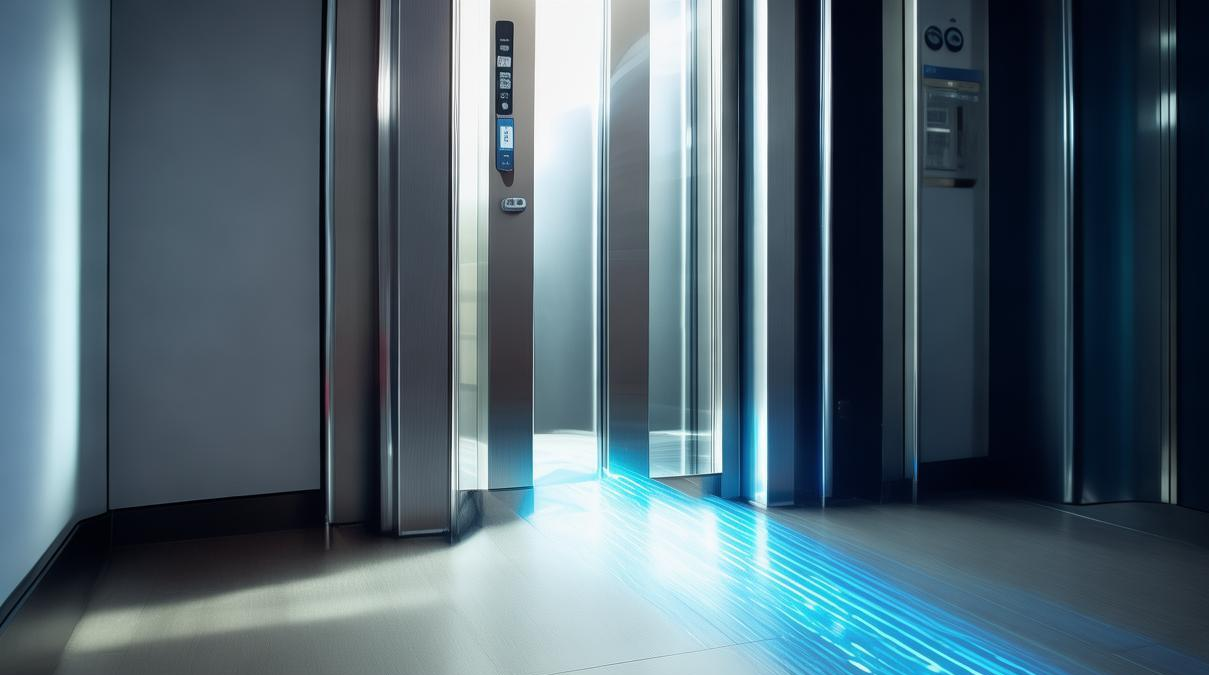
Every time an elevator door closes, a silent, invisible shield is at work. An elevator light curtain is an advanced infrared safety device that projects a grid of beams across the door opening, instantly detecting any obstruction—from a passenger’s hand to a piece of luggage. Unlike traditional mechanical edges that require physical contact, this non-contact sensor triggers an immediate door reversal, preventing accidents before they occur. Modern building codes, including EN 81-20 and ASME A17.1, increasingly mandate such protection for passenger safety. Understanding how these systems function, from beam counts and 2D versus 3D technologies to proper installation, troubleshooting common failures, and selecting top brands like WECO or CEDES, is essential for building managers, technicians, and anyone responsible for elevator safety and code compliance.
It looks like you've shared the standard SQuAD evaluation formulas for precision and recall, but no actual correct answer and prediction tokens are provided. Without those token sets, I cannot compute a numerical F1 score.
If you give me:
- The correct answer (ground truth) as a string, and
- The prediction (model output) as a string,
I will:
- Tokenize both answers (space‑splitting is typical for SQuAD).
- Count true positives (tokens in both), false positives (prediction tokens not in correct), and false negatives (correct tokens not in prediction).
- Compute precision, recall, and then F1 = 2 * (precision * recall) / (precision + recall).
Please provide the two text strings, and I’ll calculate the F1 score for you.
Types, Technologies, and Key Features

2D vs 3D Elevator Light Curtains – Differences and Applications
2D elevator light curtain detect an obstruction in a single vertical plane. They work well for most passenger elevators. 3D light curtains, like the WECO 3D or CEDES 3D, add depth sensing. They measure object proximity and speed. This cuts down false triggers in busy areas like malls or offices. Both types meet 2D Edge and 3D Edge safety rules under modern codes. For high-traffic buildings, I recommend 3D light curtains to reduce unnecessary door reversals.
Table 1: Comparison of 2D vs 3D Light Curtains
| Feature | 2D Light Curtain | 3D Light Curtain |
|---|---|---|
| Detection Plane | Single vertical plane | Multiple planes plus depth |
| False Trigger Rate | Moderate in busy areas | Low due to depth/proximity sensing |
| Best Application | Standard passenger elevators | High‑traffic malls, offices, hospitals |
| Edge Compliance | 2D Edge | 2D Edge and 3D Edge |
| Price | Lower | Higher |
Beam Count Explained – How Many Beams Do You Need?
Standard series have 24 to 64 beams. These fit residential or low-traffic lifts. High-density series have 96 to 194 beams. They are best for commercial buildings, hospitals, or barrier-free elevators. High beam counts detect small objects and are ideal for applications requiring a precise light curtain safety solution.
I showed you how light curtains work. They use a grid of infrared beams. This stops pinching right away. You now know 2D and 3D types. Install them right and check often. Follow EN 81-20 and ASME A17.1 codes. Troubleshoot with a simple 7-step guide. These devices save lives and lower costs. Pick a trusted brand. Your elevator is safer now.
References
- https://www.pandaelevatorparts.com/what-is-an-elevator-light-curtain/
- https://www.dcelevator.com/enhance-elevator-safety-and-efficiency-with-light-curtains/
- https://industrialsafetysensor.com/safety-light-curtains/elevator-light-curtain/
- https://elevatorlightcurtains.com/elevator-light-curtain-installation-guide/
- https://www.aflyelevators.com/how-does-an-elevator-light-curtain-work/
Connect
Get In Touch
With WECO Today
No.88 Hulin Road, Daqi, Beilun, Ningbo, 315806, China
TEL & WHATSAPP: 86 15857498114
Email: shadow@weco.cc